
30 minutes
None. Mild redness for a few hours at most
Visible immediately
Every 4 weeks, aligned to the skin’s natural cell turnover cycle
$90 per session, or $45 as an add-on to another treatment
Dermaplaning is the treatment people are most skeptical about until they have had one. It sounds like shaving; the at-home tools are everywhere, and it is not obvious why you would pay for something that appears so simple.
The difference is what is actually being removed. At Bruce Wellness & Aesthetics in Cary, NC, dermaplaning uses a surgical-grade blade held at a controlled angle to lift away the outermost layer of dead skin along with the fine vellus hair on the surface. That layer is what makes skin look dull and what stops products from absorbing properly, and removing it is not something a razor does.

Dermaplaning is a manual exfoliation treatment performed with a sterile surgical-grade blade. The blade is drawn across the skin at a shallow angle, removing the stratum corneum, which is the outermost layer of dead cells, together with the fine vellus hair often called peach fuzz.
That stratum corneum is the reason the treatment works. As dead cells accumulate, they scatter light rather than reflecting it, which is what makes skin look dull, and they also sit between your skincare products and the living skin underneath. Removing that layer is what produces the immediate change in brightness and why products applied afterward absorb better.
It is a physical exfoliation rather than a chemical one, which makes it suitable for people who cannot tolerate acids and for skin that reacts to more aggressive treatment. There is no heat, no downtime, and no recovery period.
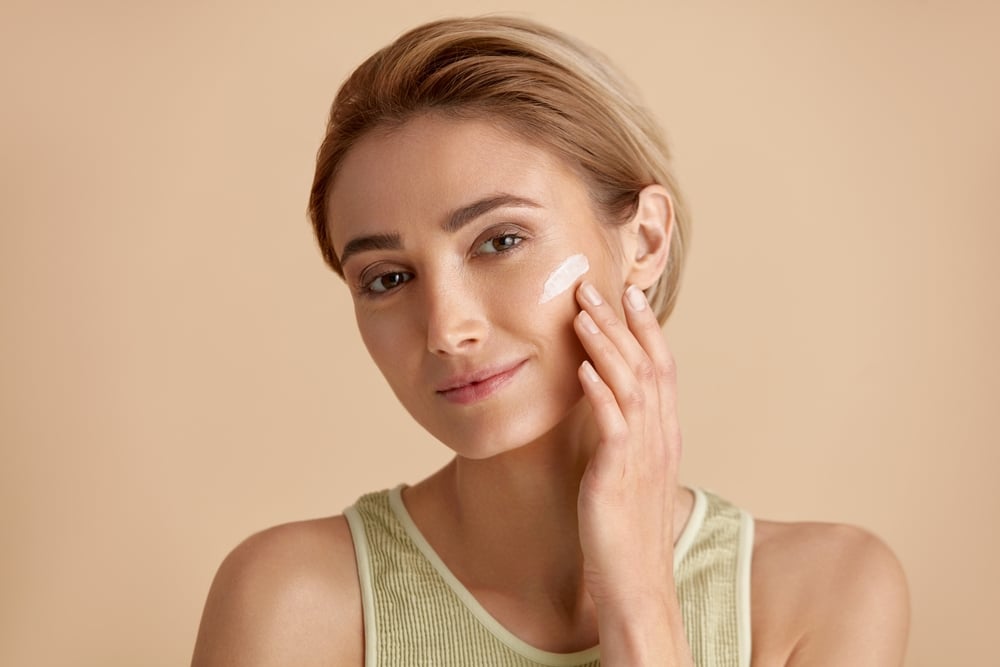
Your provider begins by cleansing the skin thoroughly, since the blade needs to move across a dry, clean surface to work correctly. The skin is then held taut section by section while the blade is drawn across it at roughly a forty-five-degree angle.
Angle and pressure are what separate this from shaving, and they are the reason it is done by a trained provider rather than at home. Too steep and the blade catches; too shallow and it removes the hair without the dead skin layer, which is most of the benefit. Getting it right takes practice on faces that vary considerably in texture and contour.
The whole treatment takes about thirty minutes and is comfortable throughout. Most people describe the sensation as a light scraping, similar to a soft brush moving across the skin. A serum or moisturizer is applied afterward, and this is the point at which product absorption is at its best.
Dermaplaning is the treatment people book before an event and then keep booking. It does one thing well, and it does it immediately, which is a reasonable description of what most patients actually want from a facial service.
Dermaplaning is performed on the face and neck, working around the contours section by section. Areas with coarse or terminal hair are avoided, which is why it is not used on the brows or hairline.
The standard treatment, working systematically across every section.
One of the areas where dead skin buildup is most visible under makeup.
The largest area and where vellus hair tends to be most noticeable in daylight.
Treated carefully, and a common reason patients book in the first place.
Addressed with attention to contour, avoiding any coarse hair.
Follows the natural line of the face where texture often changes.
Where fine hair catches light most obviously.
Treated to smooth texture and clear buildup around the nostrils.
Treated gently, as the skin here is thinner than elsewhere on the face.
Frequently included, since it shows texture change as readily as the face.
Dermaplaning works at the surface, which defines both what it does well and where it stops. Concerns rooted in the surface layer respond immediately; anything structural needs a different treatment.
Dermaplaning suits most skin types, including sensitive skin that reacts badly to acids or heat. It is a good option for anyone wanting brighter skin without downtime, and particularly for patients who have found their skincare products stopped seeming to work.
There are situations where it should be avoided, and being specific about them matters more than it might seem. Dermaplaning is not appropriate over active breakouts or cystic acne, since drawing a blade across inflamed skin can spread bacteria and worsen it. It should also be avoided during a rosacea flare, over eczema or psoriasis patches, on any open lesion or wound, and during a cold sore outbreak.
If you have taken isotretinoin recently, wait until your provider clears you, as skin remains fragile for some months afterward. Coarse or terminal hair is also a reason to choose a different hair removal method, since dermaplaning is designed for fine vellus hair only. Your suitability is confirmed before treatment begins, and if it is not right for you today, you will be told so rather than treated anyway.

The appointment takes about thirty minutes from start to finish. Your skin is cleansed thoroughly and dried completely, since the blade needs a clean and dry surface to work against.
Your provider then works across the face section by section, holding the skin taut and drawing the blade at a controlled angle. It is comfortable throughout, and most people describe it as a light scraping rather than anything sharp. There is no numbing and nothing to prepare for.
Afterward, the skin is noticeably smoother to the touch straight away. A serum and moisturizer are applied, and this is when absorption is at its best. Mild redness sometimes appears and settles within a few hours. You can wear makeup and return to normal activity immediately, though skin will be more sensitive to sun for several days.
There is very little to do either side of a dermaplaning appointment, which is part of the appeal. The points below are the ones that make a difference.
The immediate smoothness and brightness typically last around three to four weeks, which corresponds to the skin’s natural cell turnover cycle. As new cells reach the surface and the old ones accumulate again, the dullness gradually returns.
This is why treatment is usually scheduled monthly rather than as a one-off. Vellus hair regrows at the same fine texture it had before, which is worth stating plainly since the belief that it grows back coarser is the second most common concern after the shaving question. You can see representative results in our before and after gallery.
Dermaplaning clears the surface, which makes almost everything applied afterward work better. That is the reason it is offered as a $45 add-on rather than only as a standalone treatment.
This is the comparison most patients are making before they book, whether or not they say so. The honest answer is that the tools do a different job rather than a worse version of the same one.
At-Home Tool or Razor | Professional Dermaplaning | |
|---|---|---|
What is removed | Vellus hair only | Vellus hair plus the stratum corneum |
Blade | Consumer blade, often reused | Sterile surgical-grade blade, single-use |
Angle and pressure | Whatever you manage in a mirror | Controlled angle applied by a trained provider |
Effect on dullness | Little, since the dead skin layer stays | Immediate, because that layer is what dulls the skin |
Risk | Nicks, irritation, uneven results, spreading bacteria over breakouts | Assessed for suitability before treatment begins |
Dermaplaning looks simple, which is exactly why technique matters. The difference between a treatment that brightens the skin and one that only removes hair comes down to blade angle and pressure across a face that changes contour constantly.
Performed by Trained Aesthetic Providers: Blade angle and pressure are what produce the result, and they are learned on many different faces rather than picked up from a video.
Assessed Before Treatment: Active breakouts, rosacea flares, eczema, and recent isotretinoin all rule out dermaplaning. Suitability is checked rather than assumed.
Sterile Single-Use Blades: A fresh surgical-grade blade every time, in a medical setting.
Honest About What It Does: Dermaplaning is a surface treatment. Where your concern is texture, scarring, or pigment at depth, you will be pointed toward the treatment that addresses it.
Straightforward Pricing: $90 per session or $45 added to another treatment, stated openly rather than quoted only on inquiry.
01
This is the question worth answering properly, because the two look similar and are not. A razor removes hair. Dermaplaning removes hair and the stratum corneum, which is the outermost layer of dead skin cells, and that second part is where nearly all the benefit comes from.
The difference comes down to the blade and the angle. A surgical-grade blade held at roughly forty-five degrees and drawn across taut skin lifts that layer away. A razor held at the angle you would use on your legs does not, which is why shaving your face leaves it smooth but not brighter. Doing it properly means seeing what you are working on across contours you cannot easily reach in a mirror, and using a fresh, sterile blade rather than a reused one.
02
No. Vellus hair regrows at exactly the texture and color it was before, because cutting hair at the surface does not affect the follicle that produces it. This is the second most common concern after the shaving question, a nd it is worth being clear about. The hair may feel slightly different for a day or two because it has been cut bluntly rather than tapering naturally, but it grows back the same.
03
Dermaplaning is not suitable over active breakouts or cystic acne, since drawing a blade across inflamed skin can spread bacteria and make it worse. It should also be avoided during a rosacea flare, over eczema or psoriasis patches, on open lesions or wounds of any kind, and during a cold sore outbreak.
If you have taken isotretinoin in the past several months, wait until you are cleared, as skin stays fragile for some time afterward. It is also not the right choice for coarse or terminal hair, which needs a different removal method. Your provider checks all of this before treatment rather than after.
04
No. Most people describe it as a light scraping sensation, similar to a soft brush moving across the skin. There is no numbing, no heat, and nothing sharp in the way patients expect. Mild redness afterward is possible and settles within a few hours.
05
Every four weeks is the usual rhythm, which matches the skin’s natural cell turnover cycle. Treating more often does not give the surface time to renew and can leave skin sensitized. Some people book seasonally or before events rather than monthly, which is a perfectly reasonable way to use the treatment.
06
Yes, and combining it with a facial is the most common way patients have it, which is why it is offered at $45 as an add-on rather than $90 standalone. Clearing the dead skin layer first means the products used during the facial reach living skin.
Chemical peels are a slightly different case. Dermaplaning beforehand can help a peel work more evenly, but because both are exfoliating treatments, they are usually spaced rather than performed in the same appointment. Your provider will advise on timing based on your skin and which peel is being used.
07
Before treatment, pause retinoids, acids, and scrubs for three to five days, and do not come in with sunburn or a fresh tan. Afterward, wear broad-spectrum SPF 30 or higher daily, since freshly exfoliated skin burns more easily, and wait two to three days before resuming active ingredients. There is no downtime otherwise, and you can wear makeup the same day.
08
Dermaplaning is $90 per session, or $45 when added to another treatment such as a facial. That second option is how most patients have it, and it is generally the better value if you were booking a facial anyway. Patient financing is available for larger treatment plans.
09
Yes, and this is one of the few treatments where that is genuinely true. Skin is smoother to the touch as soon as the treatment finishes and looks brighter straight away, because the dull layer has been physically removed rather than gradually improved. The effect typically holds for three to four weeks before dead cells accumulate again.
Patients travel to our MacGregor Pines practice from across Wake County and the wider Triangle. The practice sits just off Cary Parkway, minutes from MacGregor Downs and within easy reach of Apex, Morrisville, and both Raleigh and Durham.
Dermaplaning is one of the few treatments where the result is visible before you get to your car. If you have been curious about it but unsure whether it is worth booking rather than buying a tool, thirty minutes will answer that better than anything written here.
Call us at (919) 390-2848, visit us at 160 MacGregor Pines Drive, Suite 310A, Cary, NC 27511, or contact us online to book. It is also worth asking about adding it to a facial, which most patients find to be the better option.